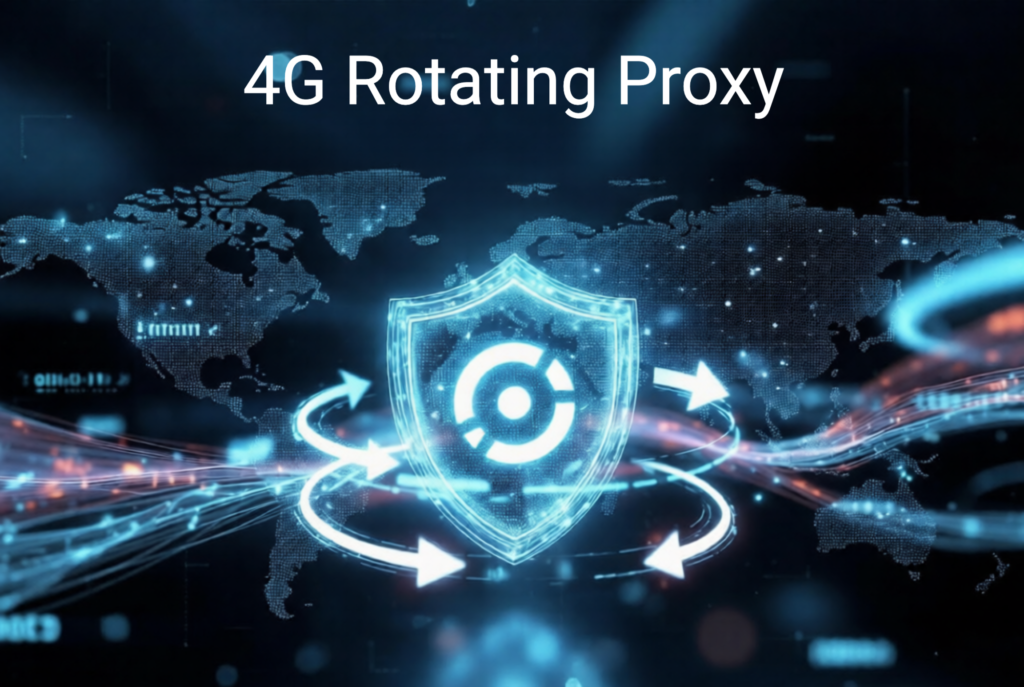
4G Rotating Proxy
Buy 4G rotating proxy with authentic mobile carrier IPs and smart rotation settings. Designed for professional scraping, account management, and ad testing. High success rates, unlimited bandwidth, and easy API integration. Get your rotating 4G mobile proxies for sale now.
How 4G Rotating Proxies Work
A 4G rotating proxy uses a large pool of real SIM cards connected to live cellular towers. When you send a request, the system assigns a fresh 4G mobile IP. The IP then rotates based on your settings, and all responses return through the same path while keeping your original IP completely hidden.
This natural rotation mimics how real mobile devices switch IPs when moving between cell towers or reconnecting to the network. As a result, rotating 4G proxies achieve extremely low detection rates even on the strictest platforms.
Rotation Methods Comparison
| Rotation Type | Description | Recommended Use Cases | Typical Settings |
|---|---|---|---|
| Per-request | New IP for every single request | Aggressive web scraping, data extraction | Every connection |
| Time-based | IP changes after a fixed time interval | General automation, monitoring | 5–15 minutes |
| Sticky sessions | Same IP for a set duration | Account login, checkout, long sessions | 10–60 minutes |
| On-demand | Manual or API-triggered IP change | Instant refresh when needed | Immediate |
Real Performance of 4G Rotating Proxies in 2026
Quality 4G rotating proxies deliver reliable speeds suitable for most automation tasks:
- Download speed: 10–100 Mbps (average 20–50 Mbps in real conditions)
- Upload speed: 5–30 Mbps
- Latency: 30–60 ms
- Uptime: 99.9%+ on premium pools
These metrics make 4G mobile rotating proxies fast enough for web scraping, social media management, ad verification, and mobile app testing.
4G vs Other Proxy Types
| Feature | 4G Rotating Proxy (Mobile) | Rotating Residential Proxies | Datacenter Proxies |
|---|---|---|---|
| IP Source | Real 4G/LTE cellular carriers | ISP home broadband | Server farms |
| Trust & Stealth Level | Highest | High | Lowest |
| Detection Risk | Very low | Low | High |
| Rotation Naturalness | Extremely natural | Good | Artificial |
| Average Speed | 10–100 Mbps | Medium | Very fast |
| Latency | 30–60 ms | Variable | Lowest |
| Success Rate on Strict Sites | 98–99%+ | 94–97% | 70–85% |
| Best For | Social media, ads, app testing | General scraping, SEO | High-speed, low-cost tasks |
4G rotating proxies clearly win when maximum undetectability and mobile authenticity are required.
Key Benefits
- Extremely low ban rates thanks to shared carrier IPs and natural rotation behavior
- Precise geo-targeting at country, city, and carrier (ASN) level
- Unlimited concurrent connections and bandwidth
- Full support for HTTP(S) and SOCKS5 protocols
- Consistent performance across 160+ countries
- Easy integration with browsers, scrapers, and automation tools via API
Top Use Cases
Professionals buy 4G rotating proxies for these demanding tasks:
- Social media account management and automation (Instagram, TikTok, Facebook, X)
- Large-scale web scraping and public data collection
- Ad verification and multi-geo campaign testing
- SEO rank tracking with accurate mobile SERP results
- Competitor price monitoring and market research
- E-commerce multi-account operations
- Mobile app testing under real 4G network conditions
- Bypassing geo-restrictions while maintaining realistic mobile fingerprints
Best Practices
To achieve the best results with your 4G rotating proxy:
- Use precise city-level geo-targeting whenever possible
- Set time-based rotation to 5–15 minutes for most scraping tasks
- Apply sticky sessions (10–30 minutes) for login and checkout flows
- Combine with realistic user-agent rotation and browser fingerprinting
- Monitor proxy health and rotate proactively when success rates drop
- Respect platform rate limits to avoid behavioral detection
- Test different carriers in the same location to find the best performance
4G vs 5G Rotating Proxies – Quick Comparison
| Metric | 4G LTE Rotating Proxy | 5G Rotating Proxy | Best Choice for Most Users |
|---|---|---|---|
| Download Speed | 10–100 Mbps | 50–500+ Mbps | 5G (if speed is critical) |
| Latency | 30–60 ms | 10–30 ms | 5G |
| Global Coverage | Excellent (95%+ of populated areas) | Good, but limited in many regions | 4G |
| Stability | Very high | Can vary with network load | 4G |
| Cost | More affordable | Usually higher | 4G |
For the majority of automation, account management, and scraping tasks, 4G rotating proxies provide the best balance of reliability, coverage, and price.
FAQ – 4G Rotating Proxy Questions Answered
Are 4G rotating proxies better than residential proxies? Yes, especially when you need frequent natural rotation and the highest level of trust. Mobile IPs are shared among real cellular users, making them much harder to flag.
How fast is a 4G rotating proxy in practice? Real-world performance usually delivers 20–50 Mbps download speed with 30–60 ms latency — more than enough for smooth automation and data collection.
Can I use 4G rotating proxies for Instagram or TikTok automation? Absolutely. They are one of the most effective solutions for managing multiple social media accounts with minimal risk of bans.
What rotation interval should I use? For scraping — 5–10 minutes or per-request. For account management — 15–60 minute sticky sessions.
Is it legal to use 4G rotating proxies? Using them for legitimate business activities (public data scraping, ad verification, account management) is generally acceptable. Always comply with platform terms of service and local laws.
Ready to Buy 4G Rotating Proxy?
When you decide to buy 4G rotating proxies, focus on these important features:
- Large pool of diverse 4G mobile IPs
- Flexible rotation options (per-request, time-based, sticky, on-demand)
- Precise country, city, and carrier-level targeting
- Unlimited bandwidth and high concurrent connections
- Reliable API integration and easy setup
- Strong uptime and professional support